
Every IP. Every number. One inventory.
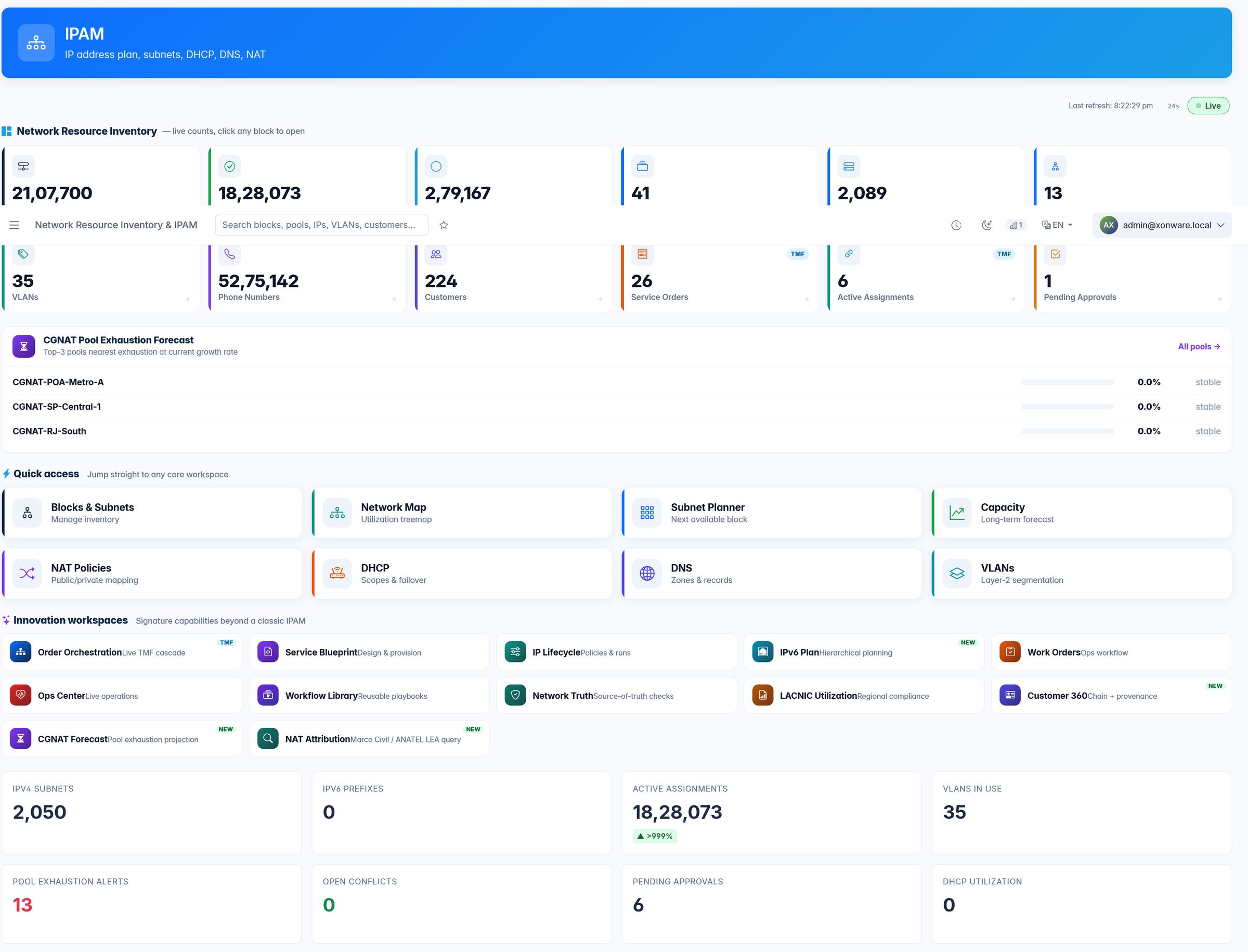
XonIPAM treats every IP address and every telephone number as a real, materialised, audited object. From the /8 supernet to a single host. From allocation through portability to quarantine and release.
From five blocks
to 1.8 million rows.
A typical tenant: 5 blocks become 240 subnets, become 1,800 pools, become 1.8 million materialised addresses. Every level is queryable, every change is history. This is what pre-materialisation buys: audit answers in milliseconds at carrier scale.
What is IP address management (IPAM)?
IP address management is the planning, allocation, tracking and auditing of IPv4 and IPv6 address space. At carrier scale, spreadsheets fail structurally — overlaps go undetected and history is lost. XonIPAM materialises every block, subnet, pool and address as a real, audited database row.
- Conflict detection built into the schema
- 30/60/90-day exhaustion forecasting per pool
- Live console shown right here — demo data
Bring one messy /16 to the walkthrough. We will import it live.
Book a technical walkthrough →